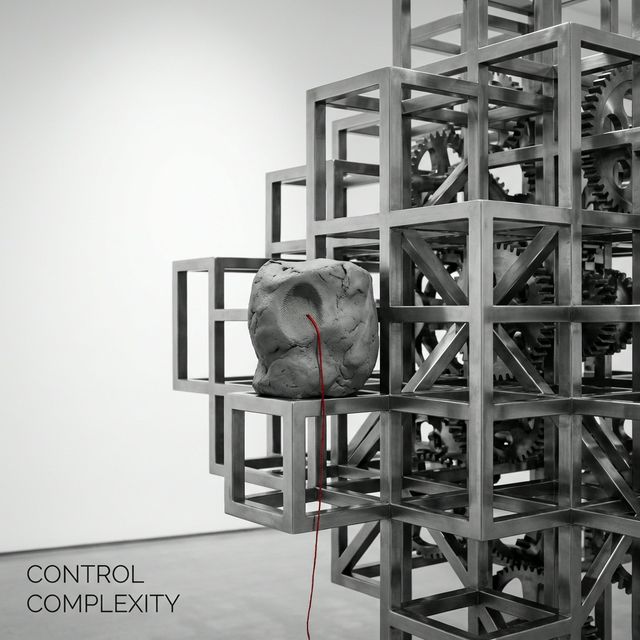
In 1983, Lisanne Bainbridge wrote a paper titled "Ironies of Automation." Her central thesis was simple yet devastating: "The more advanced a control system is, so the more crucial may be the contribution of the human operator."
Forty years later, in the age of Kubernetes and Platform Engineering, we are living this irony every day.
The "Golden Path" Trap
The promise of Platform Engineering is the "Golden Path"—a standardized, automated route to production. We abstract away the complexity of K8s, networking, and IAM behind a sleek UI or CLI.
But abstraction is not elimination. When the automation works, it's magic. When it breaks, the developer is left staring at a black box, lacking the mental model to understand what went wrong.
We have replaced "understanding the system" with "understanding the abstraction of the system." And the abstraction is often leakier than the underlying tech.
eBPF: Observability Without Toil
So how do we fix this? We need systems that are observable by default, not by configuration.
This is why eBPF (Extended Berkeley Packet Filter) is the most important technology in DevOps today. It allows us to instrument the kernel itself. We don't need to ask developers to add sidecars or import tracing libraries.
With eBPF and OpenTelemetry, we get deep visibility into every syscall, network packet, and function call with zero code changes.
// eBPF (C-like) hook for tracking TCP retransmits
SEC("kprobe/tcp_retransmit_skb")
int trace_retransmit(struct pt_regs *ctx) {
  u32 pid = bpf_get_current_pid_tgid();
  // We capture the event directly at the kernel level.
  // The application doesn't even know we are watching.
  bpf_perf_event_output(ctx, &events, BPF_F_CURRENT_CPU, &data, sizeof(data));
  return 0;
}
Kernel-native observability. No sidecars. No YAML. Just truth.
Human-Centric Reliability
The solution to burnout isn't more automation. It's better interfaces.
At R3F, we build "Thinner Platforms." We expose the underlying complexity when necessary, but enable deep, instant debugging through eBPF-powered tools. We honor the human operator by giving them X-ray vision, not just a blindfold.